Replacing spreadsheets and email threads
Move orders, approvals or scheduling into one application with roles, history and an audit trail.

AiRedHQ designs and builds web applications, SaaS platforms, dashboards and portals in Next.js, React and Node for startups and growing businesses. A typical MVP ships in 4 to 6 weeks and a full product in 8 to 16 weeks, with working software to review every two weeks.
Nivara Living · last 30 days
Store dashboard
Revenue
₹26,983
Orders
12
Gross profit
₹11,340
Today
Create a fast, accessible web product with architecture your team can understand, operate and extend.
Move orders, approvals or scheduling into one application with roles, history and an audit trail.
A focused MVP with sign-up and the one workflow customers will pay for, live in weeks rather than quarters.
Move screen by screen to a typed, tested stack instead of risking a big-bang rewrite.
Fast public pages connected to catalogue, orders, appointments and billing behind them.
Businesses that need a web application rather than a brochure site: software with logins, roles, data and workflows.
hiARed and vkRetA give us practical experience with multi-role platforms, dashboards, business websites and operational workflows.
Secure multi-role products with clear workflows, permissions and product analytics.
Dense operational interfaces designed for scanning, comparison and repeated action.
Self-service experiences that connect users to accounts, services and support.
Maintainable applications that integrate complex data and business processes.
Concrete artifacts you keep, whoever builds the next version.
Data model, service boundaries, authentication and roles, hosting choice, and the reasons behind each.
TypeScript contracts shared by frontend and backend, with validation at every boundary.
Every pull request gets its own preview URL to review; merging to main deploys to production.
WCAG AA checks and loading, interaction and layout-shift targets, checked before each release.
Unit and end-to-end tests on the workflows that matter most to the business.
How to deploy, roll back, rotate secrets and add a feature, written for the team that takes over.
Interview users and map the workflow and every role in it.
Output: Scope and priorities
Data model, API shape, authentication and hosting.
Output: Architecture document
Wireframes and key screens for each role.
Output: Clickable prototype
Two-week increments, each reviewed on a preview deploy.
Output: Working software every sprint
Accessibility, performance and end-to-end tests.
Output: Release checklist
Monitor real usage, optimize and hand over.
Output: Runbook and roadmap
The right stack depends on what the site has to do. We recommend the simplest option that will still fit in two years.
Choose a custom Next.js application when you have accounts, roles, dashboards, integrations or business logic that sets you apart. It is the stack behind vkRetA and this website.
Choose WordPress when the site is mainly content and marketing pages edited by non-technical staff. It gets costly once application logic is forced into plugins.
Choose an existing product when your workflow is standard. A small shop can often use a ready store builder such as vkRetA without hiring a developer at all.
Start small and keep going only if it is working. Durations are typical; the first conversation sets the real scope.
Typically 2 weeks
Code, architecture, performance and accessibility review with a prioritized fix list.
Typically 4–6 weeks
One core workflow, end to end, deployed to production.
Typically 8–16 weeks
A multi-role platform with admin tools, integrations and analytics.
Monthly retainer
A steady team for new features, framework upgrades and performance work.
We do not publish fixed prices because scope varies widely. These factors move cost and timeline most; an audit or discovery engagement turns them into a written estimate.
We cut the first release to the workflow that proves the product, then add from real usage.
Microservices rarely help a first release. We start simpler and keep a path to scale.
Core Web Vitals and accessibility budgets are cheaper to keep than to recover.
Without tests and a runbook, the first change by a new developer is risky.
We build and run software of our own. These are the parts that relate to this service.
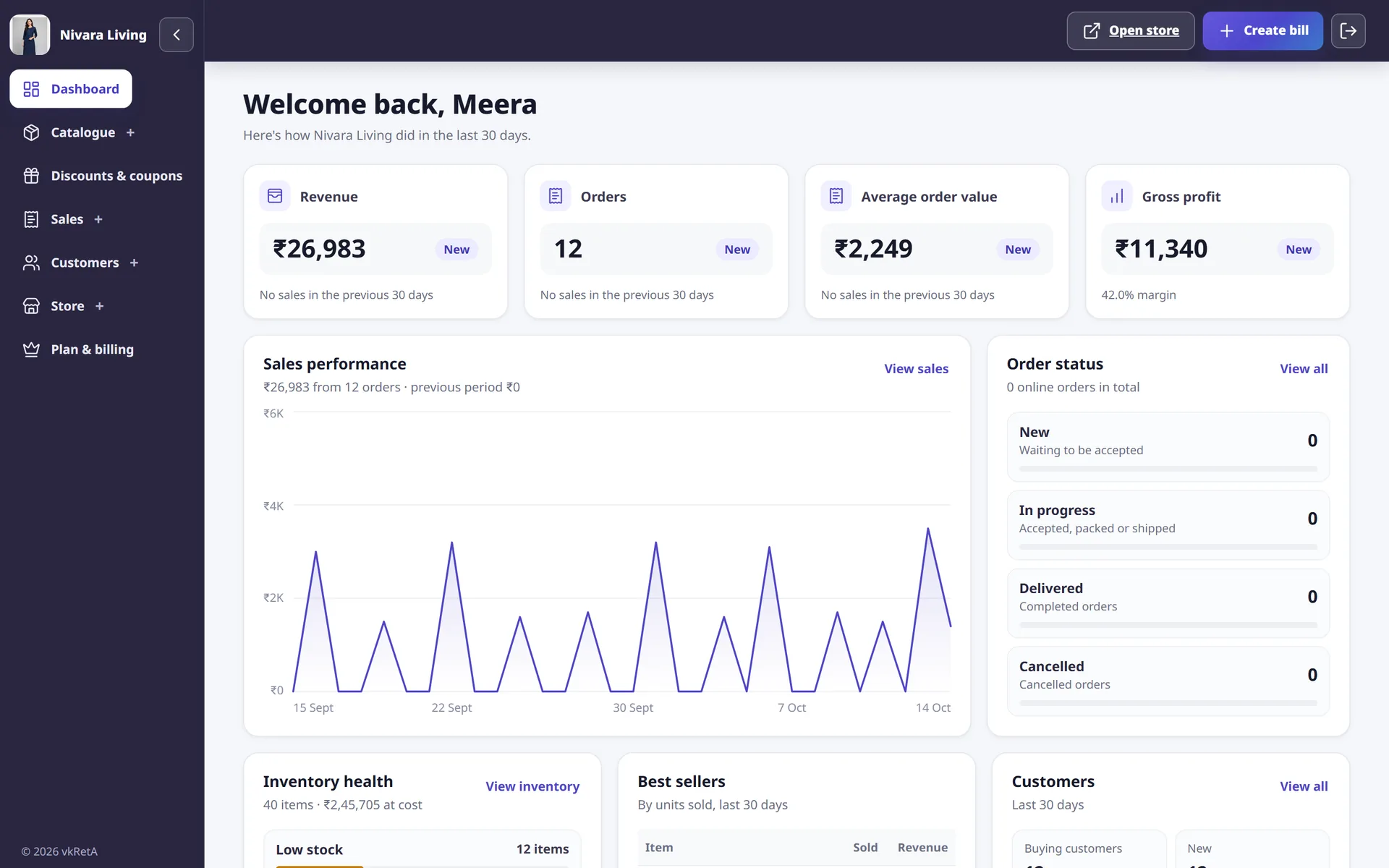
A store website plus catalogue, orders, appointments, GST billing and customer credit for Indian small businesses. Built on Cloudflare Workers with D1 and R2, and installable as a PWA.
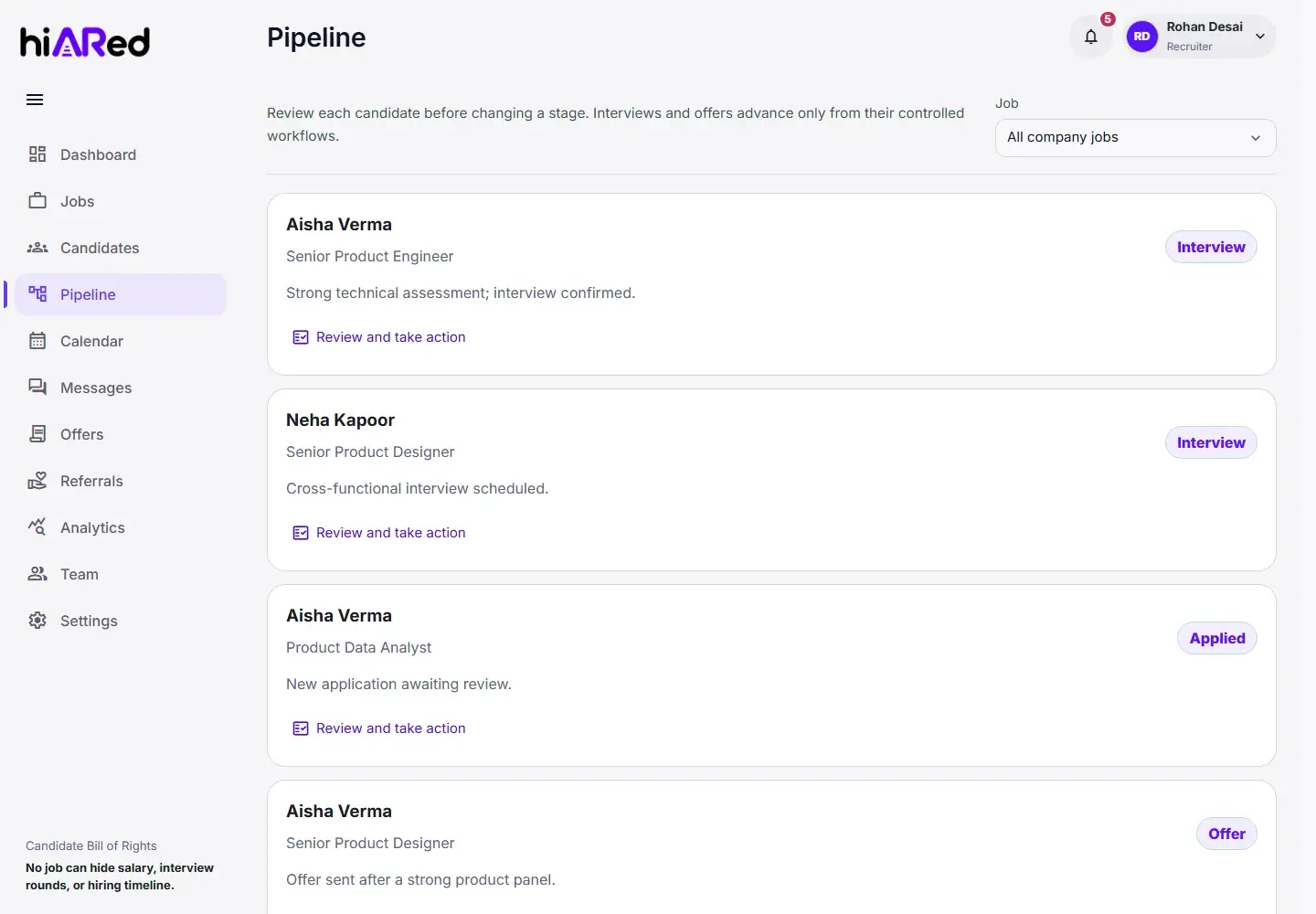
A transparent jobs marketplace and hiring workspace with separate candidate and recruiter dashboards, a hiring pipeline, scorecards and offers.
Built with Next.js and deployed on Cloudflare through OpenNext.
TypeScript end to end, server rendering where it helps, and a data model your team can extend. Hosting is chosen per product: edge platforms such as Cloudflare Workers, or containers with PostgreSQL and Redis.
 Next.js
 React
 TypeScript
 Node.js
 PostgreSQL
 Redis
Updated
Yes. We assess the current product, identify risk and modernize incrementally where a full rewrite is not justified.
Yes. We design the product interface, application architecture, APIs, data model and delivery foundation as needed.
Performance budgets, server rendering, caching, observability and disciplined component architecture are built into delivery, and checked before each release.
A focused MVP typically takes 4–6 weeks and a multi-role platform typically 8–16 weeks. A two-week audit or discovery phase gives a firmer estimate for your scope.
Yes. The architecture document, typed code, automated tests and runbook are part of every build so your team can run and extend the product.
Yes. Tenant-aware data models, role-based access, billing integration and admin tools are common parts of our SaaS development work. hiARed and vkRetA are both multi-role platforms we designed and run.
Yes, when it is set up well. Server rendering, unique metadata per page, structured data, fast loading and clean URLs all help. We build these in from the start rather than adding them after launch.