
Immersive Learning
Evidence-led guidance for designing, operating and evaluating purposeful AR and VR learning.
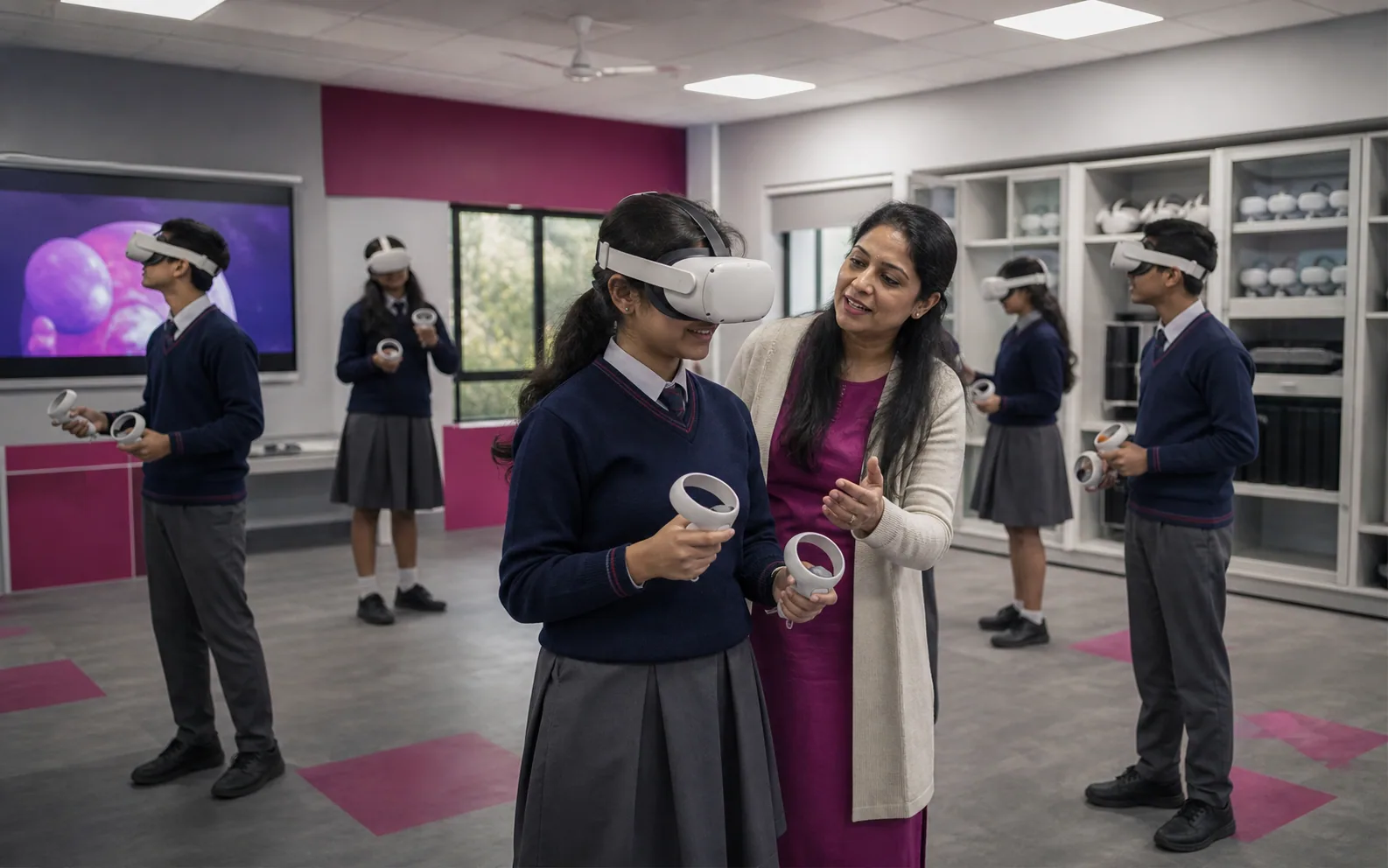
Planning AR and VR learning labs for schools and colleges
Augmented and virtual reality can make difficult topics easier to understand, from the inside of a cell to the working of an engine, but only when the lab is planned around teaching goals rather than hardware. This section helps school leaders, teachers and training managers decide whether an AR/VR lab is right for them and how to run one well.
The main guide walks through a full plan: running a small pilot before buying at scale, choosing between headsets, tablets and projected setups, budgeting for devices, content, training and maintenance, and measuring learning outcomes so the investment can be judged on evidence. It also covers practical concerns such as session length, student comfort and supervision.
Costs and research findings are dated and sourced. Prices vary widely by vendor and region, so treat the ranges as a starting point for quotes rather than final figures.
More immersive learning guides are planned, including content design and teacher training. Suggestions are welcome at info@airedhq.com.
Where to start
- 1AR/VR labs in schools: pilot, budget and outcomesA complete planning guide, from the first pilot class to measuring results.
Related from AiRedHQ
- AR/VR development servicesHow we design and build immersive learning and training experiences.
- Talk to us about a pilotShare your subject, class size and budget and we will suggest a starting point.