To calculate your daily limit until payday, subtract protected savings and all committed costs from the money currently available, then divide the result by the number of spending days remaining. The result is a limit to stay under, not a target to spend.
- Formula:
(available money − committed costs − protected savings − buffer) ÷ days remaining.- Count today if you still expect to spend today.
- Keep rent, EMIs, subscriptions and planned transfers out of the daily pool.
- Recalculate after an unexpected bill, refund or income change.
The formula
Daily limit = (cash available now − unpaid committed costs − protected savings − safety buffer) ÷ spending days left
Use the payday budget calculator to run this estimate in INR.
Define each input before calculating:
| Input | Include | Do not include |
|---|---|---|
| Cash available now | Spendable bank balances and cash you will actually use | Credit limits or money owed to you but not received |
| Committed costs | Rent, EMIs, utilities, fees, known travel and recurring payments before payday | Costs already paid |
| Protected savings | A transfer you have decided not to spend | A vague goal with no reserved amount |
| Safety buffer | A small amount for uncertainty | Your full emergency fund unless the situation is an emergency |
| Days left | Every day on which normal spending may happen | Days after the next income becomes usable |
Worked example: salary due in 12 days
This is an illustrative example, not financial advice.
Meera has ₹24,600 available across the bank balance and cash she uses for daily spending. Her salary becomes usable after 12 days, including today. Before then she must pay ₹7,500 rent, ₹1,200 electricity and internet, and ₹900 for a recurring medicine. She wants to protect ₹4,000 already assigned to savings and keep a ₹1,000 buffer.
| Step | Amount |
|---|---|
| Cash available now | ₹24,600 |
| Less rent | −₹7,500 |
| Less electricity and internet | −₹1,200 |
| Less medicine | −₹900 |
| Less protected savings | −₹4,000 |
| Less safety buffer | −₹1,000 |
| Flexible pool remaining | ₹10,000 |
₹10,000 ÷ 12 days = ₹833.33 per day
Meera's daily limit is ₹833 for food, local travel and flexible purchases. It is a limit to stay under, not a target. Spending ₹600 today leaves more capacity for another day.

Recalculate when reality changes
Four days later, Meera has spent ₹2,900 from the flexible pool. Eight spending days remain, so the expected pool is ₹7,100. Then a necessary ₹1,500 repair appears.
(₹7,100 − ₹1,500) ÷ 8 = ₹700 per day
Her new daily limit is ₹700. The correct response is to update the inputs, not pretend the earlier ₹833 limit still applies.
If the result is zero or negative, calculating a daily limit is not the immediate problem. Separate essential from deferrable commitments, pause flexible spending, and decide which payment or savings transfer can change without missing an obligation. Avoid treating a credit limit as income.
Common calculation mistakes
| Mistake | Better treatment |
|---|---|
| Dividing the full bank balance | Reserve unpaid bills and protected savings first |
| Counting the same cash twice | Combine balances once and exclude internal transfers |
| Ignoring today | Count it when spending is still likely |
| Using calendar month-end automatically | Use the day the next income is actually available |
| Never updating the number | Recalculate after every material change |
| Treating the daily limit as a target | Stay under it when you can; it is a ceiling, not a spending goal |
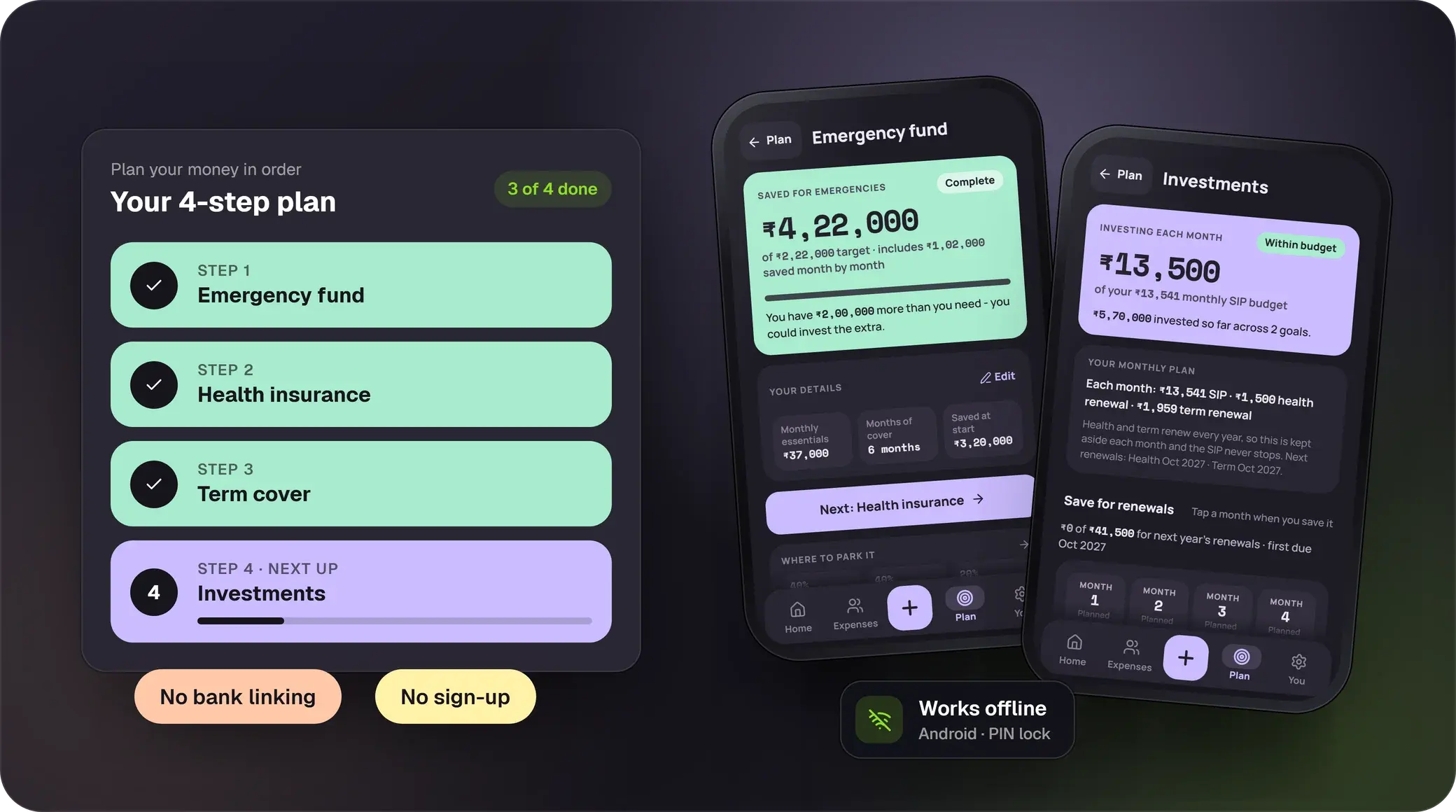
YojIQ is an Offline Budget Planner that calculates a daily limit from manually entered salary, payday, budgets and expenses. Its limitations are important: the YojIQ app does not read your bank balance, know about an expense you did not enter, or sync the plan to another device. The daily limit is only as current as the entries behind it.
The YojIQ app has no internet permission, so its data stays on your phone unless you export a backup yourself.
For a broader cash-flow plan, read how to create a personal financial plan. If the tracking must work without connectivity, use the offline expense tracker checklist.
Sources
- YojIQ product page — current description of the payday, budgeting and offline workflow.
- Emergency fund calculator guide — separate guidance for emergency reserves; the small buffer in this example is not a substitute for an emergency fund.